Condition Necessary for observing Diffraction:
Why diffraction of sound is so common while diffraction of light is not?
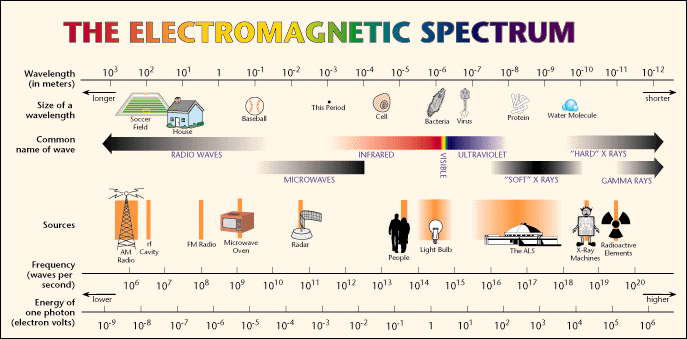
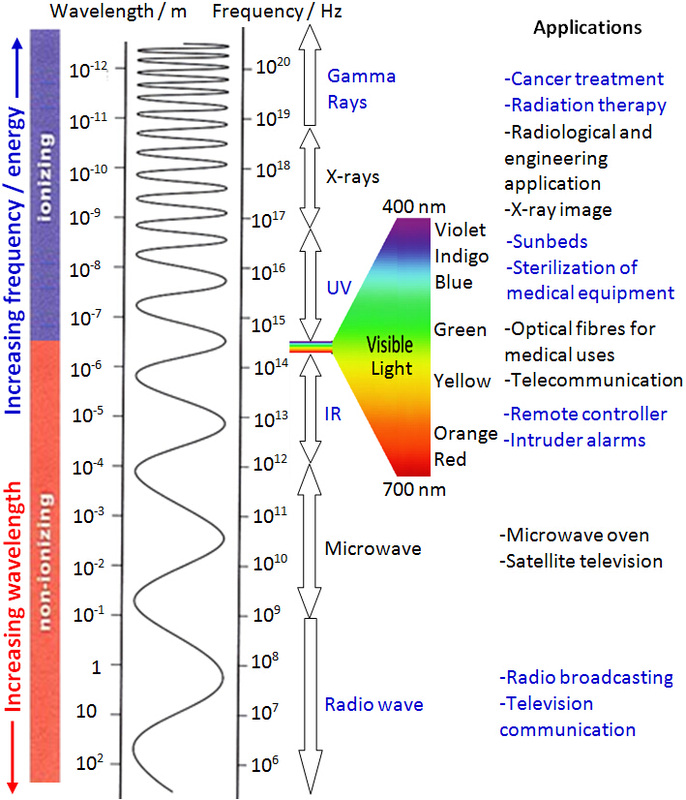
In order to observe diffraction it is required that the size of obstacle or slit must be comparable to that of the wavelength of the wave being used. Sound have wavelength of the order of few centimeter to few metre, and most of the objects in day to day life also has the same size.
But in case of light the wavelength being in nanometer(nm) order so the size of the obstacle or slit must also be the same, but in day to day life we don't have the nanometer size of the obstacle or slit hence the diffraction of light is not so commonly observed.
While X-Ray diffraction in order to study the crystal structure meet this requirement, (crystal lattice size being of the nm order and X-ray wavelength also of nm order) hence X-rays are often used to study the crystal structure.
Cause of Diffraction:
Type of Diffraction:
There are basically two types of diffraction pattern (i) Fraunhofer Class and (ii) Fresnel's Class.
Fraunhofer Class of diffraction is observed by the superposition of wavelets originating from plane wavefront while Fresnel's class of diffraction is observed due to superposition of wavelets originating from circular wavefront.
Requirement of Fraunhofer Diffraction:
Experimental setup of Fraunhofer Class of Diffraction Pattern:
Diffraction Pattern as obtained on screen:
Intensity Distribution Graph of Fraunhofer Diffraction Pattern:
Explanation of formation of central maxima in diffraction pattern:
In order to explain formation of central maxima of diffraction pattern, we use HUYGEN'S theory of wave propagation whereby "Every particle of the medium situated on the wavefront acts as a source of secondary wavelets". So when plane wavefront arrives at the slit, every points (X1, Y1 etc.) on the slit acts as a source of secondary wavelets, refer to the fig.
Thus the wavelets originating from any two diametrically opposite points (X1 and X2 or Y1 and Y2 etc.) has to travel the same distance in order to reach the center (C) of the screen, hence the path difference between any of the wavelets originated by these diametrically opposite pair is zero, and they interfere constructively, producing maxima on the screen. Hence brightness is observed at the center of the screen.
Explanation for formation of minima in diffraction pattern at an angular position P:
Explanation for formation of secondary maxima in diffraction pattern at an angular position 'P':